the studentdays survival guide ♡
MOVING TO THE NETHERLANDS · STUDENT GUIDE
6 Things to Arrange Before & After Moving to the Netherlands
New country, new chapter, lots of little things to figure out. Your friendly, practical guide to arriving in the Netherlands and making it feel like home.
✦ study ♡ live ✧ explore

✳
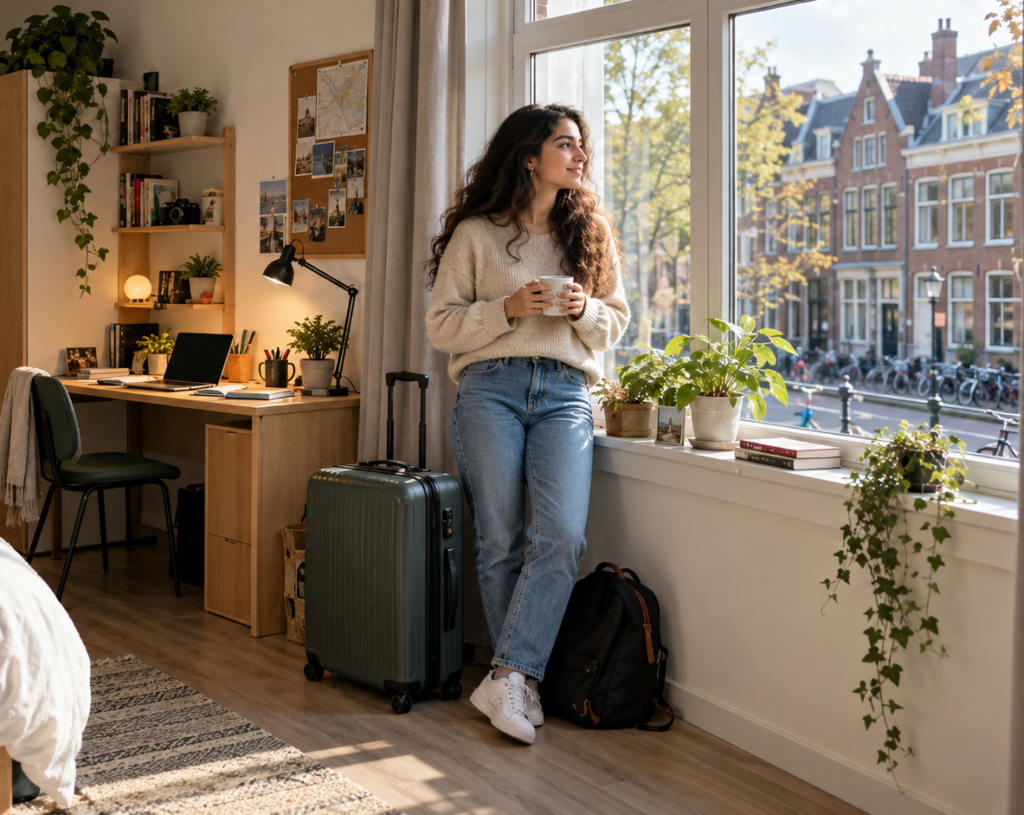
Moving to the Netherlands as an international student is exciting. You might be starting university, living independently for the first time, meeting people from all over the world, and discovering a completely new routine. But between finding housing and figuring out paperwork, it can also feel like a lot.
The information you need is often scattered across different websites. Some rules depend on your nationality, how long you’re staying, or whether you work alongside your studies. The good news? You don’t need to figure out everything at once.
Start with these six essentials. We’ve organized them into what to arrange before you arrive, what to handle during your first week, and how to make everyday student life easier.
Moving to the Netherlands as an international student involves more than packing your suitcase and booking a flight. Preparing the right documents and understanding the first steps after arrival can make the transition much easier.
a little roadmap for you ✿
Table of Contents
In this guide
CHAPTER ONE
Before You Arrive ✈
A little preparation now can save you a lot of stress later.
01
THE PAPERWORK
Check your visa, residence permit and documents
When moving to the Netherlands as an international student, it’s important to organise your documents before travelling. Keep digital and physical copies of your passport, university admission letter, residence permit information and accommodation details so they are easy to access.Before booking your flight or packing your suitcase, make sure you understand what you need to study and stay in the Netherlands. The requirements depend on your nationality and circumstances.
EU/EEA and Swiss students generally do not need a Dutch residence permit to study here. Non-EU/EEA students may need a residence permit and, depending on nationality, an entry visa called an MVV. For higher education, your university normally submits the student residence permit application to the Immigration and Naturalisation Service (IND).
Follow your university’s international office instructions and allow time for document checks. Some documents issued abroad may need official translation or legalization, and that’s much easier to investigate before leaving home.
Make a folder with:
- A valid passport or national identity card.
- Your university admission or enrolment letter.
- Visa and residence permit correspondence, where applicable.
- Financial documents requested by your institution.
- Copies of your academic and personal records.
- Important appointments, confirmation emails and contact details.
Official resource: IND student residence permits ↗
02
YOUR NEW HOME
Start searching for student housing early
Finding accommodation is often one of the toughest parts of moving to the Netherlands. Rooms in popular university cities can be competitive, and arriving without a place to stay can add stress and unexpected costs.
Begin your search as soon as you have a realistic study plan. Check whether your university offers housing assistance or recommends trusted providers. Depending on your budget, you could consider a room in a shared student house, a student residence, or a private studio.
Before accepting an offer, check:
- The total monthly cost, including utilities and internet.
- The deposit amount and payment terms.
- Distance to campus, shops and transport.
- Whether you can register with the municipality at that address.
- The rental period, cancellation terms and any house rules.
- Whether the property and landlord are genuine.
Be particularly careful with offers that pressure you to pay immediately. Avoid transferring money until you’ve verified the accommodation and contract. When possible, view the property in person or arrange a live video viewing. When moving to the Netherlands as an international student, finding suitable accommodation should be one of your priorities. Check your rental agreement carefully and confirm which facilities are included before arriving.
CHAPTER TWO
Your First Week ♡
Two important admin steps, then you’re on your way.
03
GETTING REGISTERED
Register with your municipality and get your BSN
Moving to the Netherlands as an international student usually involves registering with your local municipality if you’re staying for more than four months. This registration allows you to obtain a BSN, which is important for many administrative arrangements. One important step when moving to the Netherlands as an international student is understanding municipal registration. Depending on how long you will stay, you may need to register with the municipality and obtain a BSN. Once you’re here, one of your first official tasks may be registering at the municipality (gemeente) where you live. If you’re moving to the Netherlands for more than four months, you generally need to register within five days of arrival.
Registration provides you with a BSN (Burgerservicenummer), a citizen service number used for dealing with Dutch government organizations and various administrative processes.
Your municipality will tell you what to bring. You may need identification, proof of your address and additional civil documents, depending on your situation. If you’re staying for four months or less, registration through the Non-residents Records Database (RNI) may be relevant instead.
Make sure your accommodation allows address registration. Not being able to register where you live can create serious practical problems.
Official resource: Moving to the Netherlands — Government.nl ↗
04
TAKE CARE OF YOU
Find out which health insurance you need
When moving to the Netherlands as an international student, make sure you understand which health insurance rules apply to your situation. Requirements can differ depending on whether you’re studying only or also working in the Netherlands. Health insurance is essential, but international students do not all fall under the same rules. Your nationality, existing coverage, and whether you work in the Netherlands can affect which insurance is appropriate.
Students who are in the Netherlands solely to study are often not eligible for Dutch basic health insurance and should arrange suitable alternative coverage. If you also start working, you may become required to take out Dutch basic health insurance. The European Health Insurance Card (EHIC) may help some eligible students access medically necessary care, but it does not cover every situation.
Rather than choosing the cheapest option immediately, check how your individual circumstances are classified. Compare benefits, exclusions, excesses and travel coverage. Your university’s international office can often point you toward reliable information.
It’s also smart to learn how Dutch healthcare works. Find a local general practitioner, called a huisarts, and save the appropriate contact information for medical help.
Student resource: Study in NL healthcare insurance guide ↗
CHAPTER THREE
Settling Into Student Life ✿
Let’s make your everyday routine a little easier — and more fun.
05
EVERYDAY ESSENTIALS
Sort out banking and transportation
Paying for daily life
Understanding the transport system can make moving to the Netherlands as an international student much easier. Learn how to plan train journeys, use public transport payment methods and cycle safely before starting your daily university commute.Moving to the Netherlands as an international student also means becoming familiar with Dutch payment methods. Having access to a suitable bank account can make paying rent, buying groceries and managing everyday expenses more convenient.From groceries to rent, having an account and payment method that work for your situation makes student life much simpler. Some students open Dutch bank accounts; others continue using an eligible European account or a suitable international provider.
When comparing banks and payment apps, look beyond marketing promises. Check account fees, card acceptance, eligibility, customer service, international transfer charges and which services support your payment method.
Some account providers may require identification, a registered address or additional documentation. Ask your university what payment issues international students commonly encounter in your city.
Getting around
The Netherlands has a connected public transport network of trains, buses, trams and metros. Check routes before travelling and compare ticket or subscription options based on how often you’ll use them. The official NS website is a good starting point for train journeys.
In many student cities, a bicycle is an affordable and practical way to travel. If you’re buying second-hand, inspect the brakes, tyres, lights, frame and gears. Budget for a proper lock, and make sure the bike is legitimately sold.
06
MAKE IT YOURS
Make room for groceries, fitness and the little comforts
Once the important paperwork is organized, give yourself time to build a routine. Your new home doesn’t need to be perfectly decorated in the first week, and you don’t need to buy everything at once.
Find affordable groceries
Explore the supermarkets and local markets near you. Chains such as Albert Heijn, Jumbo, Lidl and Aldi offer different prices and promotions. Compare everyday staples, try store-brand products, and plan a few easy meals before shopping. Cooking at home can also help you manage a student budget.
Keep moving and meet people
Many universities offer sports activities, fitness facilities or student associations. A sports class, running group or cycling trip can help you meet people and feel more connected to your city. You can also explore free walking routes and outdoor exercise options.
Buy only what your room needs
Before shopping for household essentials, check whether your accommodation is furnished and what previous tenants have left behind. You may need bedding, kitchen tools, cleaning products, storage or study supplies — but probably not everything on day one.
Local second-hand stores and student groups can be great places to find affordable items. Make your own priority list and add the fun decorations once the basics are sorted. After moving to the Netherlands as an international student, give yourself time to adjust to your new surroundings. Attending university introduction activities, joining student associations and exploring your neighbourhood can help you feel more comfortable and meet new people. Moving to the Netherlands as an international student often means learning how to cycle and use public transport in a new environment. Explore the routes between your accommodation, university and nearby supermarkets to make your daily routine easier.
you’ve got this ♡
Your new chapter starts here.
Moving to the Netherlands as an international student comes with a learning curve, but you don’t have to tackle every task in one day. Begin with your documents and housing, sort out the essential registration and insurance questions, and then explore the routines that make the Netherlands feel like home.
Remember to enjoy the experience too. Try a new café, take a bike ride, join an activity and get to know your city. Student life is about more than getting the paperwork right.By preparing these arrangements before and after moving to the Netherlands as an international student, you can spend less time dealing with unexpected problems and more time enjoying your new university experience.
Your First Week in the Netherlands: A Simple Action Plan
Moving to the Netherlands as an international student can feel overwhelming at first, especially when you have several important arrangements to complete. Instead of trying to organise everything in one day, divide your tasks into smaller steps and focus on what matters most.
During your first few days:
- Check your accommodation: Collect your keys, inspect your room and make sure you understand the rules of your student housing.
- Arrange municipal registration: Check your municipality’s registration requirements and make an appointment if necessary.
- Set up your finances: Explore suitable banking options and make sure you have a reliable way to pay for everyday expenses.
- Understand your healthcare options: Check which health insurance requirements apply to you and look into registering with a local GP.
- Explore your neighbourhood: Find the nearest supermarket, pharmacy, public transport stops and cycling routes to your university.
- Connect with other students: Attend introduction events, join student groups and explore activities organised by your university.
One of the best ways to make moving to the Netherlands as an international student easier is to prepare a checklist before your arrival and update it as you complete each task.
Remember that settling into a new country takes time. You don’t need to have everything perfectly organised during your first week. Focus on your essential arrangements first, ask for help when needed and give yourself opportunities to enjoy your new surroundings.
With the right preparation, moving to the Netherlands as an international student can become the beginning of an exciting and rewarding chapter of your life.
a little something for you ✿
Want to keep everything organized?
Get our free Netherlands Arrival Checklist so you can keep track of the important steps before and after your move.